Artificial intelligence has transformed nearly every industry, from medical to automobiles to telecommunications to social media, but few sectors have seen the kind of transformation that has occurred in financial trading. From solo traders working from home to hedge funds, AI-powered trading tools promise faster decisions, better insights, and the potential for consistently profitable trades.
But it also involves some challenges…
With hundreds of AI trading tools on the market right now — bots, analyzers, predictors, automation suites, sentiment trackers — we’ll learn how to choose the right AI tools for trading.
In this article, you will learn:
- What AI trading tools actually do.
- 12 factors you should consider before choosing any trading AI.
- Different types of AI trading tools and what they are for.
- What mistakes traders commonly make when choose the right AI tools for trading.
- How to build the perfect AI-powered trading toolkit.
- The future of AI in trading.
You will get complete information about all these topics.
What are AI trading tools?
AI trading tools use machine learning, deep learning, and algorithmic models to analyze market data and help traders make better trading decisions. This is how AI works.
- Predict price movements
- Automate trade execution
- Analyze investor sentiment
- Detect patterns invisible to the human eye
- Reduce emotional trading
- Provide risk-adjusted trade ideas
- Backtest trading strategies at scale
Many top-performing traders (retail and institutional) are using at least one AI-powered tool.
Why Choosing the Right AI Trading Tool Matters
Right AI tools for trading can vary. Not all AI tools are created equal. Some are powerful but complex. Others are easy to use but limited. Some AI tools are great for crypto but terrible for stocks. That’s why it’s important to choose the right tool; choosing the wrong one could drain your capital, misalign your strategy, or simply waste your time.
What the right AI tool can do:
- Improve trading accuracy
- Reduce risk
- Save hours of chart analysis
- Identify hidden opportunities
- Help you trade like a quant without coding.
Types of Right AI Tools for Trading (Know Before You Choose)
If you are in the initial stages of trading, it is crucial to understand the different types of AI tools available for trading. To choose the right tool, you first need to understand the categories.
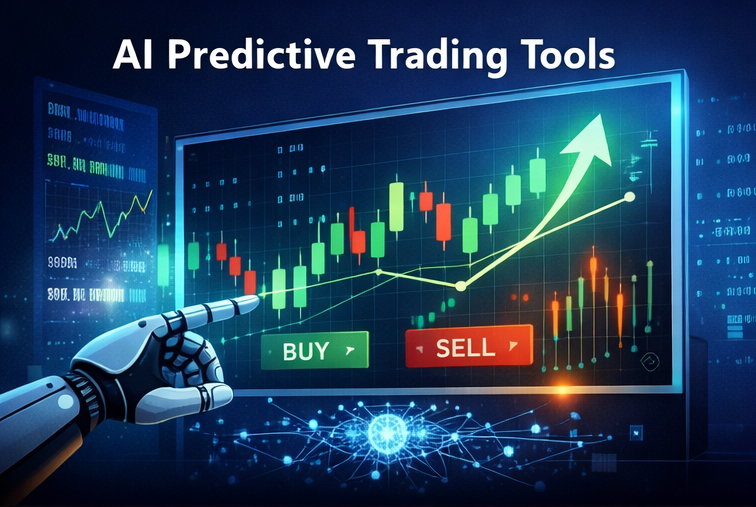
1. AI Predictive Trading Tools
These tools use machine learning models to predict price fluctuations. What you can do with the features: Examples
- Price prediction
- Trend forecasting
- Entry/Exit signal alerts
- Probability scoring
Idea References:
- Swing Traders
- Crypto Traders
- Options Traders
- Trend Followers
2. AI Algorithmic Trading Bots
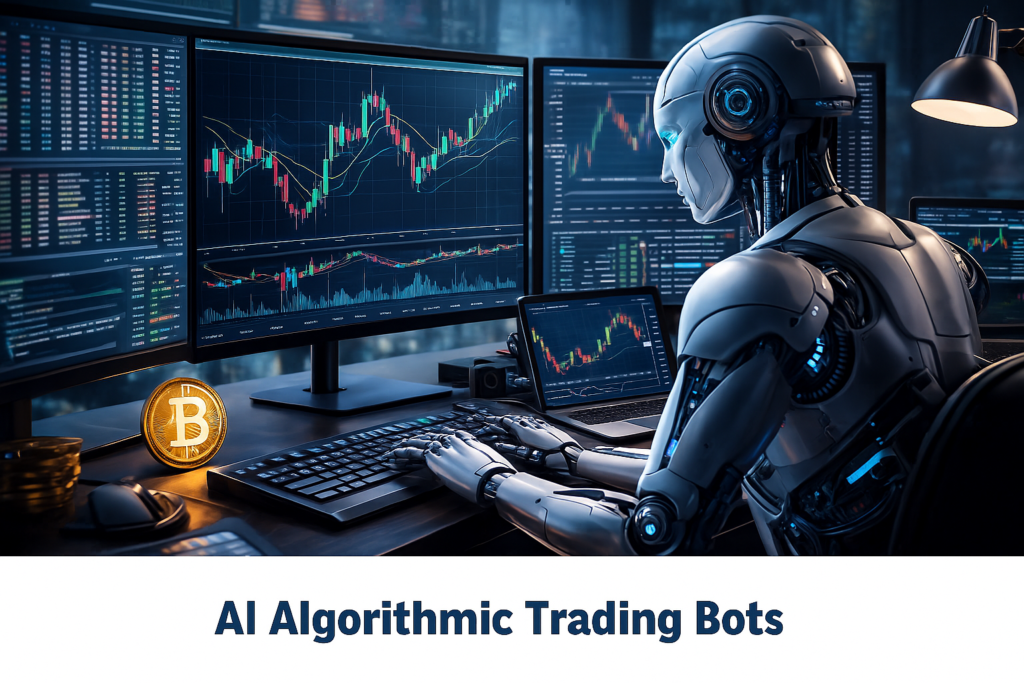
Bots that automatically execute trades based on predefined strategies or AI-generated logic.
What you can do with the features: Examples
- 24/7 automated trading
- Custom strategies
- Backtesting
- Auto stop-loss & take-profit
Ideal for:
- Crypto markets (24/7)
- High-frequency strategies
- People who want hand-off trading
3. AI Sentiment Analysis Tools
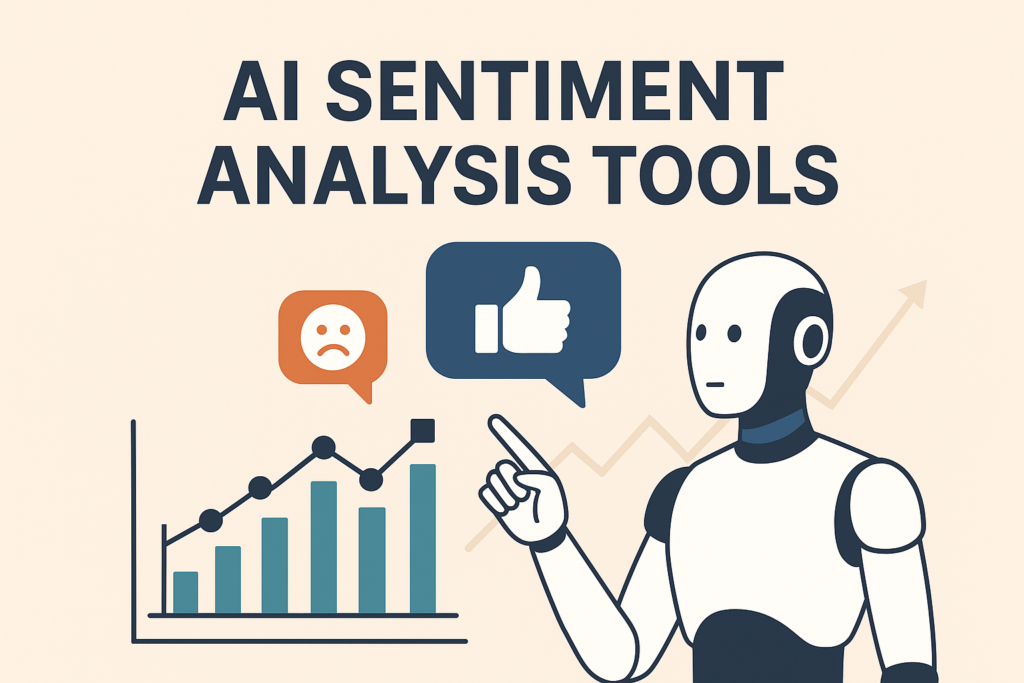
These tools measure market psychology using:
- News
- Social media
- Order flow
- Large investor movements
Ideal for:
- Crypto traders (high sentiment impact)
- Day traders
- Scalpers
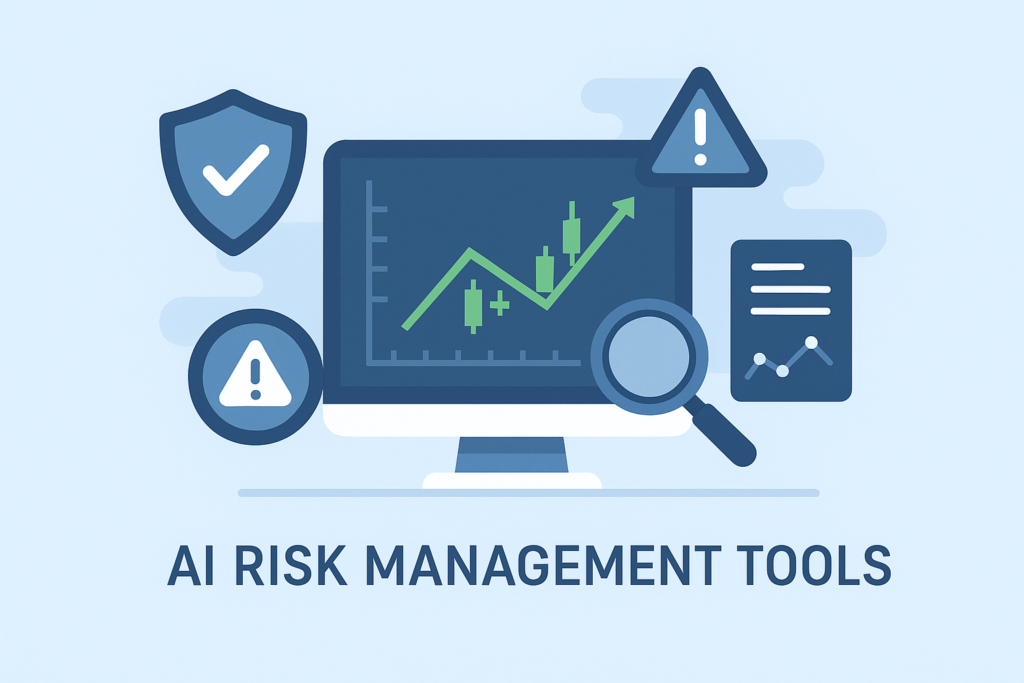
4. AI Risk Management Tools
Focus on reducing portfolio risk using advanced analytics.
Features:
- Correlation tracking
- Volatility prediction
- Risk scoring
- Drawdown control
Ideal for:
- Stock investors
- Portfolio traders
- Long-term investors
Why it’s important:
AI helps limit losses, protect investments, and maintain consistent growth in volatile markets. AI systems assess risk levels in trades, portfolio exposure, and asset allocation to ensure balanced and secure investments.
5. AI Back testing & Strategy Builders
These tools allow traders to create and test strategies using AI-enhanced datasets.
Features:
- Historical simulation
- Optimization
- Strategy templates
- Data visualization
Ideal for:
- Quant traders
- Technical analysts
- Strategy developers
12 Factors to Consider When Choosing the Right AI Tools For Trading
It’s crucial to know this before you begin.
Before spending money or incorporating any tool into your strategy, carefully consider these factors.
12 Factors to Consider When Choosing the Right AI Tools For Trading
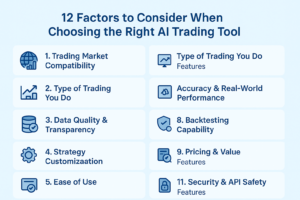
1. Trading Market Compatibility
Different AI tools specialize in different markets:
- Stocks
- Crypto
- Forex
- Commodities
- Options
- Indices
Choose one aligned with your target market.
Example: Many crypto bots do not work for stocks.
2. Type of Trading You Do
Your style determines your tool.
- Scalping → real-time prediction, automation
- Day trading → sentiment + auto alerts
- Swing trading → trend forecasting
- Long-term → risk analysis + signal filters
3. Data Quality & Transparency
AI is only as good as its data.
Check if the tool offers:
- Institution-grade data feeds
- Transparent data sources
- Real-time updates
- No “black box” unknown models
4. Strategy Customization
Some tools are plug-and-play; others let you build strategies manually.
Look for:
- Editable parameters
- Strategy library
- AI-generated strategies
- No-code customization
5. Ease of Use
An AI tool should simplify trading — not complicate it.
Ask:
- Is the UI intuitive?
- Is there a learning curve?
- Are tutorials available?
6. Accuracy & Real-World Performance
Check:
- Past performance
- User reviews
- Verified results
- Drawdown history
Never trust tools showing 100% win rates.
7. Risk Management Features
Crucial for beginners.
Look for:
- Stop-loss automation
- Volatility alerts
- Risk scoring
- Position sizing tools
8. Backtesting Capability
A good AI tool must allow:
- Multi-year historical testing
- Strategy refinement
- Parameter optimization
9. Pricing & Value
AI trading tools range from:
- Free tools
- $10–$50/month (mid-range)
- $100–$300/month (premium)
- Enterprise pricing
Choose based on your experience level and capital.
10. Customer Support
Essential if you face technical issues.
Check:
- Live chat
- Tutorials
- Discord/Telegram community
- Support response time
11. Security & API Safety
When connecting exchanges, security is everything.
Ensure:
- API keys are encrypted
- Withdrawal permissions disabled
- Two-factor authentication
12. Trial Version or Refund Policy
Always test before committing.
Tools offering free trials or 30-day refunds show confidence in their product.
Common Mistakes Traders Make When Choosing AI Tools For Trading
Most traders fail because they choose tools based on hype.
Here are some common mistakes:
❌ Choosing a tool that doesn’t match their trading style – A scalper using a swing-trade predictor could end up ruined.
❌ Expecting AI to guarantee profits – AI is a tool, not a replacement for skill.
❌ Ignoring risk management – Even the strongest AI can’t protect reckless trading.
❌ Not understanding how the AI makes predictions – Black-box tools can be dangerous.
❌ Paying for expensive tools without testing – Always backtest and trial before buying.
How to build a perfect AI trading toolkit : Beginner to Advanced
Here is a recommended toolkit based on your experience level.
Beginner Toolkit
- AI trade signal tool
- Sentiment analyzer
- Basic risk tool
- Chart pattern detector
This is how you need to understand how AI improves the decision-making process.
Intermediate Toolkit
- Predictive AI model
- Automated bot with rules
- Multi-market sentiment tool
- Backtesting engine
- Portfolio tracker
Objective: To reduce manual work and increase accuracy.
Advanced / Professional Toolkit
- Advanced machine learning predictor
- Custom algorithmic bot
- Institutional-grade data feed
- Options AI optimizer
- Multi-exchange automation
- High-frequency market scanner
Purpose: Trade like a quant.
How to Test an AI Trading Tool Before You Commit
Here’s a simple step-by-step process:
- Sign up for the free version
- Connect ONLY a paper trading account
- Run backtests on multiple timeframes
- Compare past predictions to real outcomes
- Test automated features
- Analyze error rate
- Check community feedback
- Only then use real capital
This prevents 90% of beginner mistakes.
Future of AI in Trading: What’s Coming Next?
The next evolution includes:
- Fully autonomous trading agents
- Generative AI strategy creation
- Hyper-personalized trading bots
- AI-powered risk prevention systems
- Real-time global sentiment prediction
- Quantum-AI hybrid trading models
In the coming years, most trading desks will be primarily run by AI systems.
Conclusion:
Choosing the right AI tools for trading ultimately comes down to understanding your trading style, evaluating the quality and transparency of the tool’s data and predictions, and ensuring the platform offers essential features such as risk management, backtesting, and reliable automation. While AI can enhance accuracy, speed, and consistency, it is not a magic solution—successful trading still requires discipline, strategy, and continuous learning. By selecting AI tools that align with your goals, market, and skill level, you can build a smarter, more efficient trading workflow that improves decision-making and increases your long-term profitability.
To choose the right AI tools for trading, it’s important to consider the following factors:
- Knowing your trading style
- Understanding the tool’s purpose
- Testing before buying
- Ensuring high-quality data
- Prioritizing risk management
- Matching features to your goals
AI can transform your trading — but only if you choose the right AI tools for trading.